
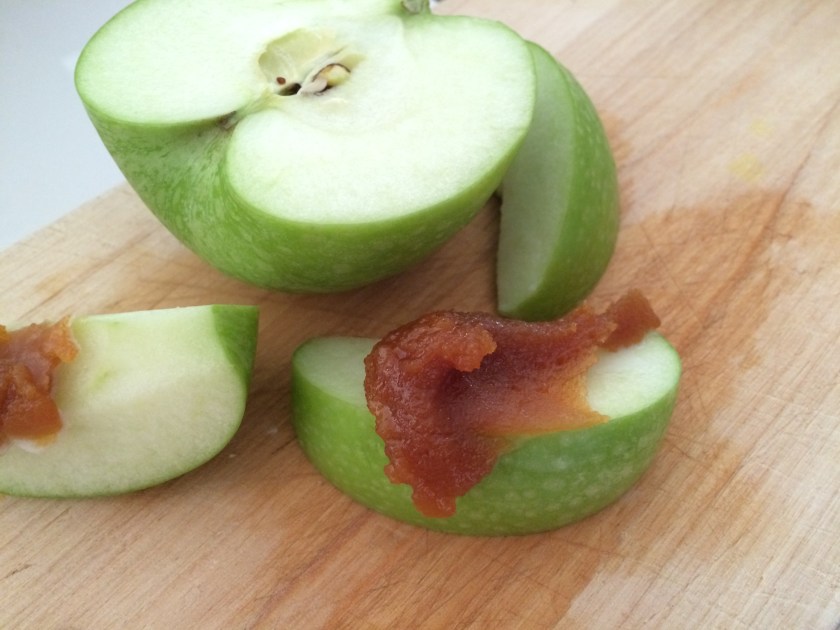
A few weeks ago, I received a sample of a new product called Cocotrella, made by Ceylon Pure. It’s a gluten-free, nut-free, sweet and luscious spread made with just two ingredients: kitul nectar (more on that below) and coconut butter.
Before I even got it into my mouth, Cocotrella’s impressive certifications caught my attention: USDA Organic, certified Fair Trade, Non-GMO Project verified, plus it’s naturally vegan and gluten free.
But the real payoff is the taste and mouth feel—even though it looks a little grainy, it’s fabulously smooth and melts on the tongue, with a just-right toasted caramel flavor and a hint of coconut. The company likens it to Nutella as a sweet spread, but I think Cocotrella tastes SO much better. It’s perfect for paleo pancakes or apple slices. And don’t judge me if I simply eat it with a spoon.
Traditional crop in Sri Lanka
Aside from Cocotrella being just plain delicious, the product immediately intrigued me because I’d never heard of kitul. Turns out it’s a fascinating crop with an interesting history and strong potential as an old-is-new, healthy, delicious, low-glycemic sweetener.
Farmers harvest kitul sap from the flower-cluster stalks of the kitul (aka kithul or kittul) tree, grown throughout Southeast Asia but tapped only in Sri Lanka (formerly Ceylon).

The kitul (jaggery palm) tree
(By the way, kitul nectar is also called treacle, but that’s a name used for any unrefined sugar syrup, whether sourced from dates, cane sugar, coconut, or other plant. Jaggery, the solid version sold in blocks, is a common sweetener in Southeast Asian foods.)
A traditional Sri Lankan crop for 2,000 years, kitul syrup was prized by ancient Sri Lankan royalty. Harvesting kitul isn’t easy: Farmers have to climb the tree, make a cut in the flower stalk, and apply an herbal mixture that stimulates sap excretion. When the sap is ready, farmers climb back up to cut the stalk and extract the sap into a pot. (Picture maple-tree tapping … but 30 or 40 feet up in the air.) In its traditional form, this process is slow, laborious, and provides limited yield and economic return. It’s no wonder young Sri Lankan farmers weren’t flocking to this heirloom crop.

Kitul flower cluster
In recent years, the Sri Lankan government decided to help boost the craft of kitul production. As part of that effort, researchers came up with a nontoxic mixture that replaced the traditional herbal concoction; it more than doubled the sap yield and stimulated more trees to produce the sap. The inventors provided this new mixture and training free to interested tappers, hoping to revitalize this traditional industry.
Check out this article and fascinating video that describes kitul harvesting and processing. Even though the video isn’t in English, you’ll get an excellent sense of the process. (And yes, the farmer climbs the tree barefoot!)
Healthy sugar?
Reportedly, kitul is low in both glucose and fructose, making it a low-glycemic-index sweetener—a holy grail for everyone who has a sweet tooth, not to mention people battling diabetes and weight issues. However, I couldn’t find a way to verify that claim because “kitul” didn’t show up as a search result on the glycemic index site. Kitul nectar is certainly an unrefined sugar, so that has some benefit over refined white sugar; but it’s debatable whether trace minerals or other compounds really make a “healthy” difference.
Even so, I’d put kitul on par with its main Western competitor: maple syrup, which rates 54 on the glycemic index and is a current darling in paleo and other healthy circles. I love pure maple syrup, but kitul may be ready to give it a run for its money—and there’s certainly plenty of market space for truly sustainable and fair-trade sweeteners.
If you’re a Nutella fan, you might like to know that according to its brochure, Cocotrella packs 50 percent fewer calories, 75 percent less fat, and 70 percent fewer carbs per serving.
Ceylon Pure: A Mission-Based Company
I also did a little research into Ceylon Pure as a company, and I love what I see: It’s connected with Rural Returns Development Org, a nonprofit that works to alleviate rural poverty among Sri Lankan farming communities with market-based solutions, primarily systems to produce and market certified-organic, heirloom rice.
In addition to heirloom rice, Ceylon Pure has branched into organic coconut products to ride coconut’s current (and exploding) popularity.
I’ll be interested to see how this company and Cocotrella—my new favorite treat—take off.
What’s your favorite healthy sweetener? Have you heard of kitul? What do you think? I’d love to read your comments below!
 Elisa Bosley
Coconut tree vs palm tree are often confused due to their similar appearance, but they have distinct differences. Here’s a breakdown:
Coconut trees and palm trees are often mistaken for one another due to their similar appearance, but they possess distinct characteristics. The coconut tree, scientifically known as Cocos nucifera, features a tall, slender trunk with smooth, grayish bark. Often, this trunk has a slight curve as it grows. The leaves of a coconut tree are long, feather-like fronds that can extend up to 20 feet. The most notable feature of the coconut tree is its fruit—coconuts, which are large, hard-shelled fruits containing coconut water and meat. These trees thrive in tropical coastal regions worldwide and are highly valued for their coconuts, which are used for food, drink, oil, fiber (coir), and the palm leaves for thatching and weaving.
Palm trees, on the other hand, belong to the Arecaceae family and encompass a wide variety of species. The appearance of palm trees can vary significantly. Their trunks can range from slender to thick and can have either rough or smooth surfaces. Some palm trees have multiple trunks, while others have a single trunk. The leaves of palm trees can also differ, being either feather-like (pinnate) or fan-like (palmate), with sizes and shapes that vary among species. Palm trees are found in diverse climates, including tropical, subtropical, and warm temperate regions. Depending on the species, palm trees can produce various fruits, such as dates, acai berries, or betel nuts, or no fruit at all. They serve numerous purposes, including ornamental uses, food production (such as dates and acai), oil extraction (palm oil), and construction materials (leaves and wood).
The key differences between coconut trees and palm trees lie in their species and fruit. Coconut trees are a specific type of palm tree that produces coconuts, while the term “palm trees” refers to a broader category that includes many different species with varied characteristics. In terms of appearance, coconut trees are distinguished by their tall, slender, often curved trunks and long feather-like leaves, whereas palm trees can exhibit a wide range of trunk shapes and leaf types, including multiple trunks and fan-like leaves.
Understanding these differences helps in accurately identifying and distinguishing between coconut trees and the more diverse category of palm trees.
Wow, nice product!
Is it Halal?
I hear that this food haram?
Check this out